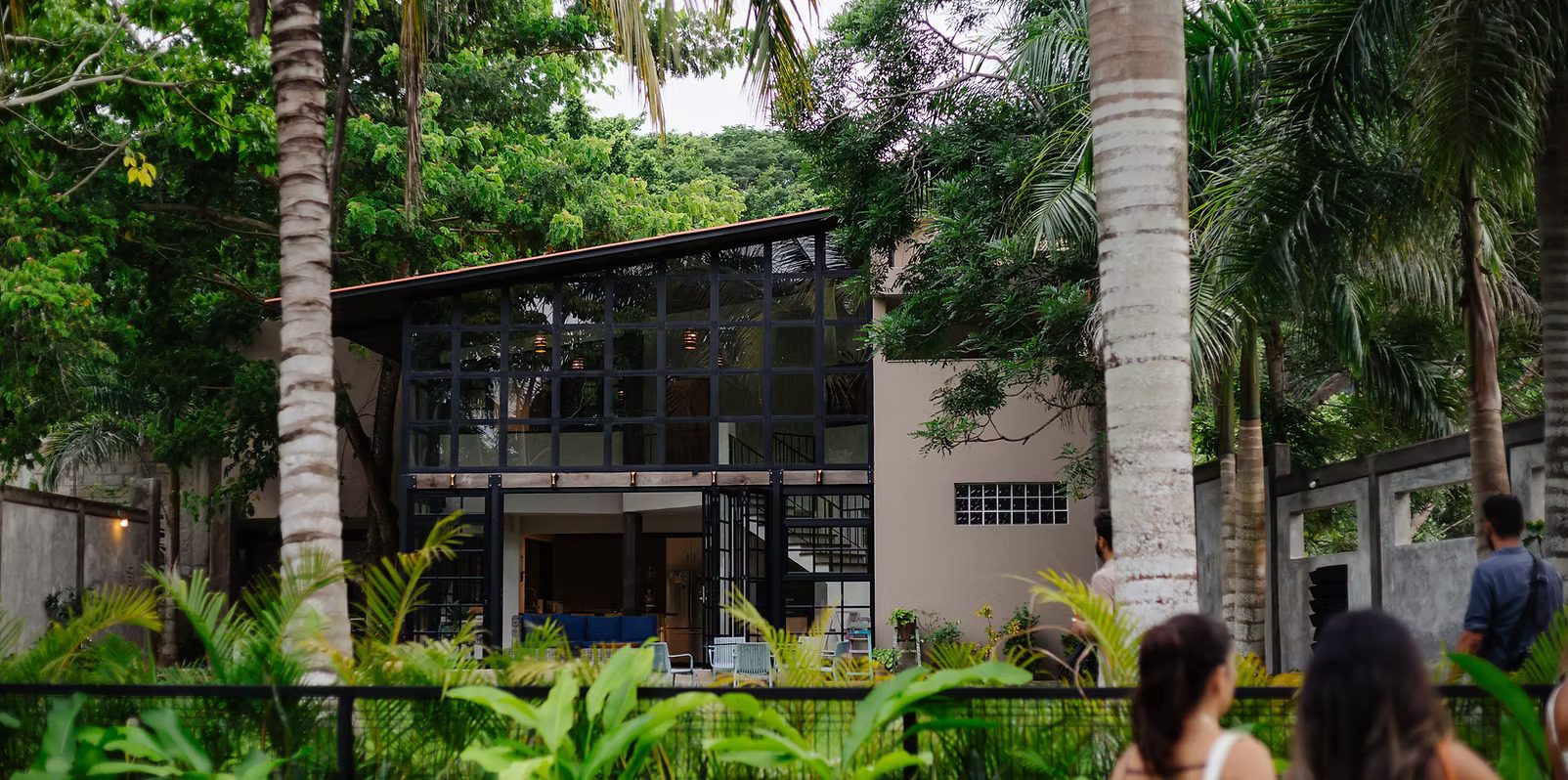
A group trip changes the moment everyone has a place to gather that is truly their own. So, can groups book exclusive estates? Absolutely. For weddings, wellness retreats, milestone celebrations, and multigenerational escapes, an exclusive estate buyout offers something a hotel block rarely can: one setting, one rhythm, and no strangers sharing the experience.
The distinction matters. A collection of resort rooms may accommodate a crowd, but it can scatter the moments that make a trip memorable. Breakfast becomes a reservation. A late-night conversation moves to a lobby. A yoga class competes with the schedule of hundreds of other guests. With an estate reserved solely for your group, the setting belongs to the people you came with - from the first coffee beneath the palms to dinner under the stars.
What Does an Exclusive Estate Booking Mean?
An exclusive estate booking, often called a full buyout, means your group has sole access to the property for the duration of the stay. That includes the residences, grounds, gathering spaces, and shared amenities. There are no neighboring hotel guests at the pool, no public event taking place across the lawn, and no need to shape your celebration around a venue's standard operating hours.
For the right group, that privacy is not a small upgrade. It is the point. A bride can take a quiet moment before the ceremony without passing through a crowded hallway. A retreat leader can hold an early meditation in an open-air studio without interruption. A family can let the day unfold slowly, with children in the pool, grandparents in the shade, and everyone meeting again at a long table as evening arrives.
At Rancho Poco a Poco, a full-property stay includes a one-acre private estate in the Sayulita valley, with three distinct residences: The Hacienda, The Villa, and The Casona. Together, the 10-bedroom property sleeps 25 or more overnight guests while offering room for celebrations of more than 250 people.
That combination is useful when your guest list has two different needs. Your closest circle can wake up on-site, while the wider community of friends and family can join for a ceremony, dinner, or celebration without requiring everyone to sleep elsewhere.
Can Groups Book Exclusive Estates for Different Types of Trips?
They can, but the best estate is one designed for the reason you are gathering. A beautifully styled home may be perfect for a few couples and still fall short for a wedding weekend or professionally led retreat. Before falling for the architecture, consider how the property supports the actual flow of your days.
Destination weddings and private events
For a destination wedding, an estate buyout brings the welcome dinner, ceremony, reception, and morning-after gathering into one private world. Rather than moving guests between venues, the weekend can feel connected. Vows beneath the palms, cocktails as the light changes, and a late dinner under the stars all happen within the same setting.
A property with separate residences is especially valuable here. It gives the wedding party, close family, or couple space to settle in without losing the shared atmosphere. It also creates natural pockets of privacy during a weekend that can otherwise feel beautifully full.
The trade-off is that a private estate is not a plug-and-play ballroom. Couples should ask about event capacity, rain planning, sound expectations, vendor access, food service arrangements, and the amount of coordination included. A thoughtful estate team helps make the weekend feel personal, but the planning should begin early, particularly for larger celebrations.
Wellness retreats
Retreat hosts need more than beds. They need a setting that supports attention, restoration, and connection without feeling overly programmed. An estate can make that possible when the wellness elements are built into the experience rather than added as an afterthought.
An open-air yoga studio, temazcal ceremonies, ice baths, massage therapy, and an XPT saltwater training pool offer meaningful ways to structure a retreat day. Guests can move from breathwork to breakfast, from a guided practice to quiet time, without climbing into vans or navigating a public resort.
Still, exclusivity alone does not guarantee a strong retreat. Facilitators should confirm the number of rooms and bed configurations, the space available for group practice, dining capacity, transportation logistics, and whether the property can support a customized itinerary. The goal is not to fill every hour. It is to give guests enough room to reset their rhythm.
Family reunions and friend-group stays
A private estate also makes sense when the occasion has no formal agenda at all. A birthday with old friends, a reunion spanning three generations, or a long-awaited group trip can be more meaningful when there is room for both togetherness and retreat.
The best days usually have very little structure. Someone starts the coffee. A few guests head out for a local adventure. Others stay close to the pool. By dinner, stories return to the table. Unlike a hotel, where everyone disappears into separate rooms or separate plans, an estate gives the group a natural home base.
For these stays, look beyond the bedroom count. Ask whether there are comfortable indoor and outdoor areas for the whole group, quiet corners for reading or working, and enough bathrooms and shared facilities to keep mornings relaxed. A house that sleeps 25 is not always a house that allows 25 people to live comfortably together.
Why a Full Buyout Feels Different From a Resort
Resorts are built for choice. An exclusive estate is built for belonging.
At a resort, service may be polished, but the experience is shared with an ever-changing public. You may reserve cabanas, restaurants, spa appointments, and event spaces, yet the property never becomes fully yours. That can work well for travelers who want variety, anonymity, and a short stay with minimal planning.
An estate asks for a more intentional kind of travel. Groups typically book for three or four nights at minimum because it takes time to settle into the setting and into one another. The value is not simply having a private pool or a larger suite. It is waking up in the same place as the people who matter, then allowing the experience to take shape around your own pace.
There is also a practical advantage. When lodging, celebration space, wellness amenities, and group gathering areas live on one property, there are fewer handoffs and fewer moments lost to transit. That can make a destination weekend feel spacious, even when the itinerary is full.
Questions to Ask Before You Book
Not every private property is equipped for an exclusive group stay. Before committing, get clear on the details that affect comfort and ease. Confirm whether the buyout includes every residence and shared area, how many guests can sleep on-site, and how many can attend an event. Ask about minimum stays, staffing, meal options, parking and transportation, and the property’s approach to outside vendors.
It is also worth asking what happens between the planned moments. Where will guests gather before dinner? Is there a shaded place for an afternoon conversation? Can a retreat participant take quiet time without feeling removed from the group? The character of a stay is often shaped by these unplanned hours.
Finally, be honest about the group itself. A wellness retreat may need dedicated practice space and flexible dining. A wedding may need event infrastructure and a clear production plan. A family reunion may value easy access, varied sleeping arrangements, and low-pressure days. The right estate will not merely fit your headcount. It will support how you want people to feel.
When the occasion deserves more than a reservation confirmation, choose a place that lets everyone arrive, exhale, and stay close. Your sanctuary should feel entirely yours - not for an afternoon, but for the memories that take time to become part of the story.