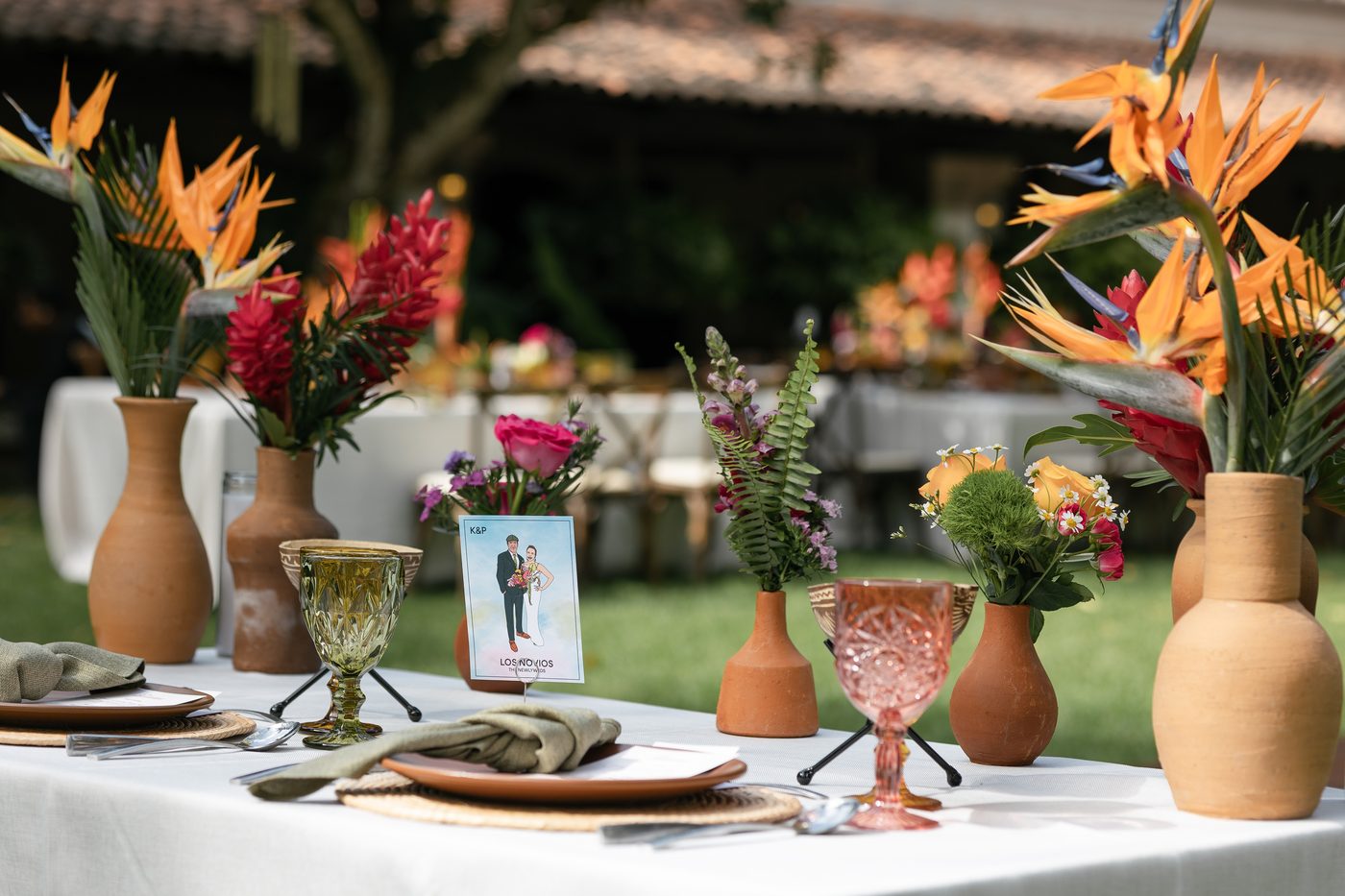
A wedding can feel intimate even with a full guest list - but only when people know where to go without being told. To manage wedding guest flow well, think beyond a timeline. Consider the feeling of each transition: the moment guests arrive beneath the palms, the quiet anticipation before vows, the release of a cocktail hour, and the easy drift toward dinner under the stars.
At a private estate, the grounds become part of the celebration's choreography. Unlike a conventional ballroom, there is no single hallway directing everyone from one room to the next. That freedom is part of the beauty. It also asks for thoughtful planning, so 50 guests or 250 can move through the day with comfort, clarity, and a sense that everything is unfolding naturally.
Begin With the Guest Journey, Not the Floor Plan
Start at the first moment guests enter the property. Where will cars arrive? Where can guests pause, take in the setting, and receive a welcome drink without creating a bottleneck? The answer should account for the time of day, the warmth, footwear, mobility needs, and whether guests are arriving all at once or in waves.
Map the day as a series of experiences rather than a collection of event zones. An arrival point should lead intuitively to the ceremony. The ceremony exit should open toward refreshments, shade, music, or a view that invites people to linger. From there, dinner should feel like the next discovery, not an announcement that requires guests to double back across the property.
This is where a private estate offers a rare advantage. With the grounds entirely yours, you can design a celebration with distinct chapters without sharing common areas with strangers. At Rancho Poco a Poco, the character of the three residences, open-air spaces, and one-acre setting makes it possible to create a sense of movement while keeping the experience connected.
Create One Clear Arrival Experience
The first 20 minutes set the tone for the whole event. If guests are uncertain about where to leave a bag, find water, or wait for the ceremony, that uncertainty follows them. A calm welcome, on the other hand, lets everyone settle into the occasion.
Keep the arrival sequence simple. Arrange a dedicated drop-off point, a visible welcome moment, and a direct path to the first gathering area. If the ceremony begins soon after arrival, offer chilled water or a signature drink close to where people naturally pause. If there is more time, give guests a reason to remain there: gentle music, a shaded lounge, or a small taste of what is to come.
For destination weddings, clear communication before the event matters as much as signage on the day. Let guests know the expected arrival window, transportation plan, dress considerations, and whether the paths include grass, stone, or stairs. This is particularly thoughtful for older relatives, guests in heels, and anyone traveling with children.
Use Signage Sparingly and Beautifully
Signs should confirm what the setting already communicates, not compensate for a confusing plan. A discreet ceremony sign at a fork in the path may be all that is needed. Too many signs can make an estate wedding feel overly managed.
Choose wording that is warm and direct. “Ceremony this way” is often more useful than a decorative phrase guests have to interpret. Place signs at decision points, not halfway along an obvious path, and make sure they remain visible after sunset.
Let the Ceremony Exit Release the Energy
After the ceremony, guests want to congratulate you, refresh their drinks, and reconnect. That energy needs space. The best ceremony exits do not send everyone through a narrow passage or toward a single bar with no room to gather.
Plan a wide, natural route from the ceremony to cocktail hour. If you want a petal toss, confetti moment, or live musicians to lead the way, build enough time and room into that transition so it feels celebratory rather than crowded. Position beverages, passed bites, and lounge seating beyond the first few steps of the exit route. This prevents the entire group from stopping in one place.
It also helps to decide where family portraits will happen before the ceremony. If formal photos are scheduled immediately afterward, choose a location that is near enough for ease but slightly apart from the main guest movement. The couple should be able to step away briefly without creating an audience around the photo session.
Manage Wedding Guest Flow Through Cocktail Hour
Cocktail hour is where a beautiful estate can either feel expansive or unexpectedly congested. The difference usually comes down to distribution. One bar, one food station, and one seating area will draw guests into the same small radius, even on generous grounds.
Give people a few reasons to circulate. Two beverage points can reduce waiting while encouraging guests to explore. Passed appetizers keep the center of the space open, while a food station placed farther along a pathway gently pulls the crowd outward. Seating should be scattered in small, inviting pockets rather than lined up in one formal block.
There is a trade-off. Too many separate moments can make guests feel dispersed, especially with a smaller group. For an intimate wedding, one central bar and a close-knit lounge may be exactly right. For a larger celebration, multiple touchpoints protect the relaxed atmosphere and keep lines from becoming the event.
As daylight shifts, make the route to dinner unmistakable. Staff can guide the first guests, music can change, and lighting can draw attention toward the tables. These cues work better than a shouted announcement because they preserve the sense of occasion.
Design Dinner for Conversation and Service
Dinner flow is about more than table placement. Guests need room to find their seats, servers need clean access to each table, and the newlyweds need to remain connected to the room without becoming visually isolated.
Avoid placing tables so tightly that guests must turn sideways to reach a chair. Leave generous circulation around the perimeter and a clear route from service areas to the tables. If the meal is family-style or includes stations, allow even more space. Guests will be standing, sharing plates, and moving back and forth, which changes the footprint considerably.
Think carefully about the relationship between dinner and dancing. If the dance floor is too close to the tables, early dancers can pull focus from toasts and dinner conversation. If it is too far away, the room can lose momentum after the final course. A nearby but distinct transition zone often works beautifully: a bar, dessert table, or candlelit lounge that naturally gathers people before the music rises.
Plan for Those Who Need a Quieter Pace
Not every guest wants to be at the center of the energy all night. A gracious event includes places for grandparents, parents with young children, and quieter friends to remain part of the celebration without standing beside the speakers.
Create a comfortable retreat within sight or easy reach of the action. Add soft seating, water, thoughtful lighting, and clear pathways back to restrooms or accommodations. At a multi-night estate stay, that ease becomes even more meaningful. Overnight guests can return to their rooms when needed while remaining close to the celebration, rather than facing a long ride back to a separate hotel.
Keep Late-Night Movement Safe and Effortless
Once the sun goes down, reassess the property as guests will experience it. Paths that felt obvious in daylight may need low, warm illumination. Steps, changes in level, and pool-adjacent areas deserve particular attention. Lighting should guide, not glare.
The final transition of the night matters, too. Whether guests are heading to an after-party, gathering for a nightcap, or returning to their rooms, give them a clear route and avoid forcing the entire group through a narrow exit at once. Coordinate transportation departures in waves when guests are leaving the property, and ensure someone is available to help guests find their way.
A well-flowing wedding does not feel controlled. It feels generous. Guests arrive welcomed, move intuitively, find the people and spaces they need, and stay present for the moments that matter. When the setting has room to breathe and every transition is considered, the day can hold both the grandeur of a destination celebration and the ease of being at home together.