A retreat can have a brilliant teacher, a thoughtful itinerary, and a devoted group, then lose its rhythm because the setting asks everyone to share space with strangers. The top amenities for retreat leaders are not simply beautiful extras. They are the elements that protect the container: privacy, purposeful gathering spaces, restorative practices, and room for people to settle into a different pace together.
For leaders bringing guests to Mexico, the venue should make it easier to teach, host, nourish, and rest. It should feel considered without feeling overproduced. The right estate becomes part of the work, offering a private setting where each day can move from breathwork to breakfast, from a workshop to a long dinner under the stars, without the interruptions of a conventional resort.
Privacy Is the Amenity That Changes Everything
A buyout property gives a retreat its own atmosphere. There is no competing pool crowd, no neighboring conference group, and no need to reserve a corner of the grounds for a morning practice. Your guests can arrive, exhale, and understand that the experience belongs to them.
This matters most for retreats built around transformation, vulnerability, or connection. Whether you lead yoga, movement, meditation, leadership work, or a creative gathering, guests participate more fully when they are not navigating public spaces between sessions. Privacy also gives you flexibility. A circle can run long. An evening ceremony can begin after sunset. A quiet morning can remain quiet.
At Rancho Poco a Poco, a full-estate stay means one group has the one-acre grounds, three residences, shared facilities, and dedicated hospitality team to themselves. With 10 bedrooms for 25+ overnight guests, leaders can keep the core group together while creating a setting that feels personal rather than programmed.
Top Amenities for Retreat Leaders: A Space for Practice
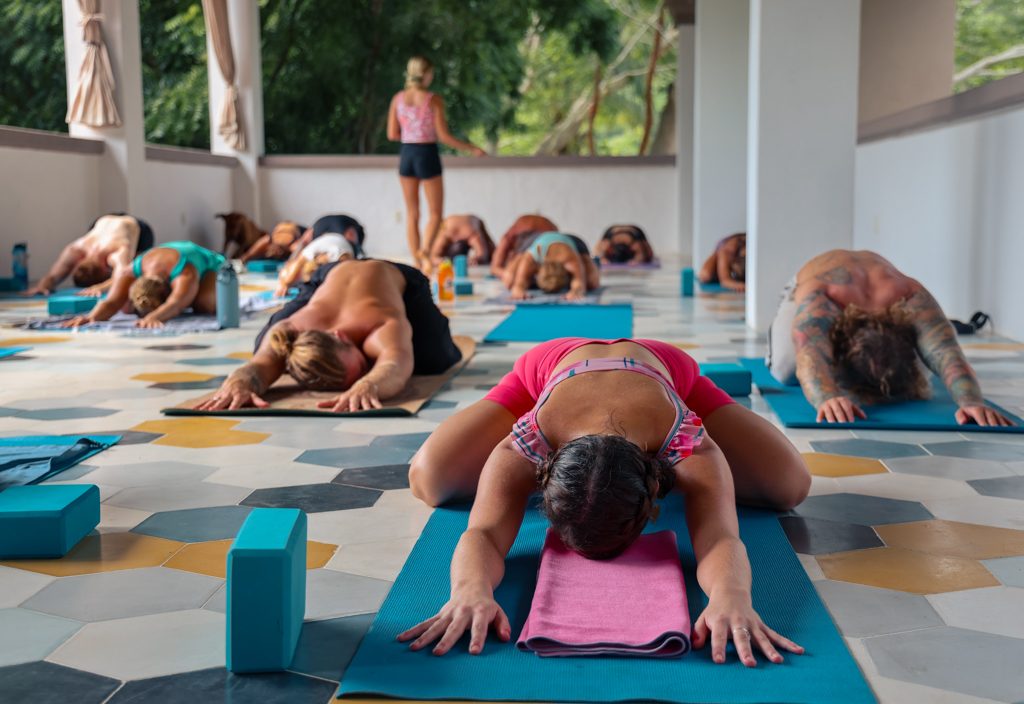
The best practice space does more than photograph well. It needs to support the way your group actually moves and gathers. Look for generous dimensions, fresh air, shade, thoughtful flooring, nearby restrooms, and enough separation from sleeping areas that early sessions do not disturb guests who need a slower morning.
An Open-Air Yoga Studio
An open-air studio creates a natural transition between inward focus and the landscape around you. The sound of birds, warm air moving through the room, and the softness of early light can make a familiar practice feel more immediate. For yoga, breathwork, somatic movement, and meditation, this kind of setting offers presence without requiring spectacle.
Still, atmosphere should be paired with function. Ask whether the studio can accommodate your expected group size comfortably, where props are stored, how the space works during rain or heat, and whether it can be reset for workshops or circles. A beautiful room that only works for one use can make the schedule unnecessarily rigid.
Flexible Gathering Areas
Retreats rarely stay in one format. You may begin with a full-group welcome, shift into partner work, gather for a teaching session, then need a relaxed place for integration afterward. Covered outdoor lounges, dining spaces, and intimate indoor rooms give leaders options without making guests feel shuffled from venue to venue.
This flexibility is particularly valuable for mixed-format retreats. A wellness leader may need room for journaling and movement, while an entrepreneur hosting a mastermind may want a focused presentation area followed by an informal conversation over dinner. The estate should support both without losing its sense of ease.
Restorative Rituals That Extend Beyond the Schedule
Guests often remember the unscheduled moments as clearly as the sessions themselves. The pause after a massage. The courage required for a cold plunge. The warmth and release of a traditional temazcal. These experiences give people a way to process what surfaced during the day.
A temazcal ceremony can be especially meaningful when it is offered with care and cultural respect. More than a wellness checkbox, it is a guided ritual of heat, steam, reflection, and renewal. It may suit a group’s opening or closing day, but it depends on the intention of the retreat and the comfort level of participants. Leaders should communicate clearly about what guests can expect and provide alternatives for anyone who prefers not to join.
Ice baths offer a different kind of reset. For some groups, they create a powerful practice around breath, resilience, and choice. For others, they are better positioned as an optional experience rather than a centerpiece. The same is true of massage therapy: it can deepen rest, but appointment timing should not compete with your most essential sessions.
An XPT saltwater training pool adds another dimension for retreats centered on movement, performance, recovery, or water-based breath training. Its value lies in versatility. It can support purposeful programming, yet it also gives guests a beautiful place to cool down, float, and reconnect between activities.
Accommodations That Keep the Group Connected
The sleeping arrangement quietly shapes the retreat experience. When guests are spread across separate hotels, every transition becomes a logistical task. People arrive late, leave early, and miss the spontaneous conversations that build trust. Keeping everyone on one private estate changes the feeling of the entire stay.
Look for a layout with distinct residences or room configurations that allow for both togetherness and retreat. Couples may want privacy. Friends may prefer to share. A facilitator needs a room that feels removed enough to prepare and decompress. If you are bringing an assistant, chef, photographer, or guest practitioner, plan for their accommodations from the start rather than treating them as an afterthought.
Three distinct residences can also help you organize the group with intention. One might house retreat leaders and support staff, another couples, and another friends traveling together. There is no single right assignment, but thoughtful rooming helps people arrive with clarity and comfort.
Hospitality Support Without a Resort Script
Retreat leaders should not spend their days solving small operational problems. You need a team that understands when to be present and when to leave the group in peace. This is the difference between personalized hospitality and a standard resort script.
Before committing to a venue, discuss the rhythm of your retreat. Can meals be timed around practice? Is there support for wellness treatments, transportation, and local excursions? Can the team help shape a special welcome dinner or closing celebration? The best support feels calm and responsive, allowing you to stay in your role as host rather than becoming the on-site coordinator.
Food deserves particular attention. Shared meals are often where a retreat becomes a community. Make space in the schedule for long, unhurried dining, and communicate dietary needs well in advance. A beautiful table beneath the palms can hold as much connection as a formal workshop when guests have time to linger.
Access to Adventure, With Space to Come Home
A retreat does not need every hour filled. Yet one or two optional local experiences can give guests a deeper sense of place and a welcome spark of play. Surf lessons, market visits, guided outdoor adventures, and cultural experiences can complement the inner work of the retreat, especially for groups returning for a second or third year.
The trade-off is energy. A packed excursion schedule can leave little room for integration, particularly on shorter stays. For a three- or four-night retreat, choose one meaningful outing or keep adventure fully optional. Your private estate should remain the center of gravity: a sanctuary where guests return to rest, reflect, and reconnect.
Choose Amenities That Serve Your Intention
The most impressive amenity list will not automatically create a meaningful retreat. What matters is whether each feature supports the experience you have promised. A movement retreat may prioritize studio time, recovery treatments, and the saltwater pool. A leadership retreat may need adaptable gathering spaces, privacy, and exceptional shared meals. A restorative women’s retreat might center ritual, massage, stillness, and room to be unhurried.
When the setting is entirely yours, amenities stop feeling like add-ons. They become part of the invitation: come together, reset your rhythm, and leave with more than memories of a beautiful place.