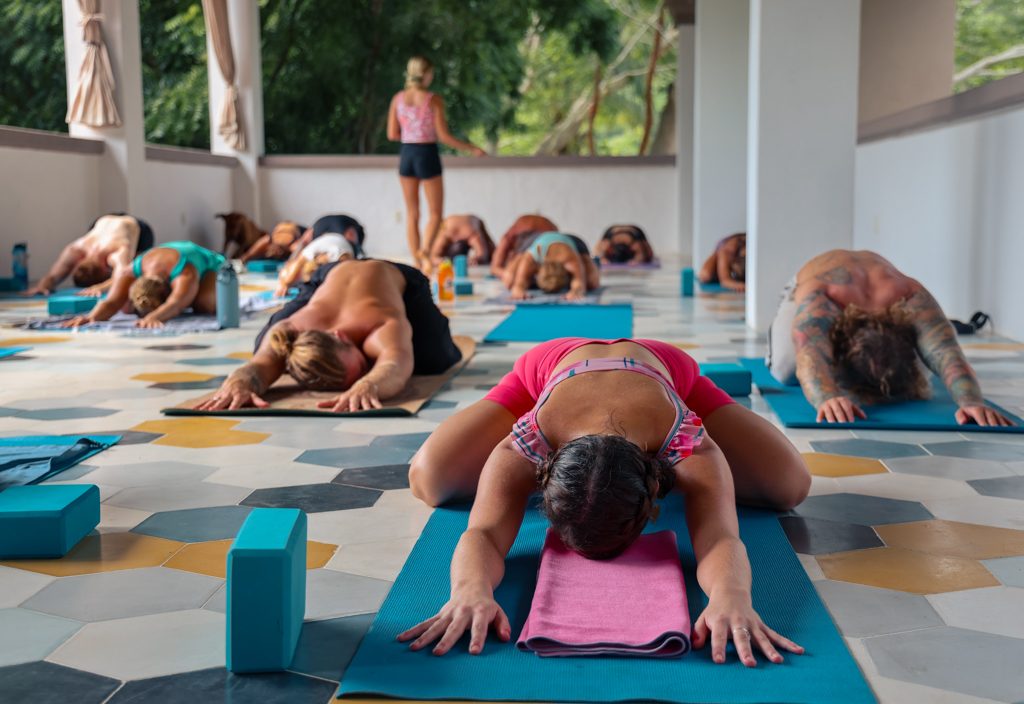
A meaningful reset rarely happens on a packed itinerary. It happens in the quiet before morning practice, in a long lunch that becomes a conversation, and in the relief of knowing no one has to rush off to a separate room or restaurant. The most restorative wellness retreats create space for those moments - with a setting that feels held, private, and entirely your own.
For facilitators and groups traveling to Mexico, the venue shapes far more than the backdrop. It determines whether the experience feels fragmented or deeply connected. A private estate in the Sayulita valley offers a different rhythm: palms overhead, jungle birds at daybreak, and one shared home base for movement, rest, ritual, and celebration.
What Makes Wellness Retreats Feel Restorative
Wellness can mean many things. For one group, it is a week of yoga, breathwork, nourishing meals, and early nights. For another, it is strength training, cold exposure, surf sessions, massage, and dinners beneath the stars. The most memorable retreats leave room for both intention and spontaneity.
That balance is difficult to create at a conventional resort. Guests may be spread across buildings, wellness programming competes with the public pace of the property, and a group dinner can feel like an event squeezed between other guests' vacations. Privacy is not a detail. It is the condition that allows people to relax their guard.
At a fully private estate, the retreat leader can set the cadence without negotiating around a property’s schedule. Start with meditation in an open-air studio. Let guests linger after breakfast. Build in an afternoon with no agenda at all. A retreat does not need to fill every hour to feel generous. Often, the unplanned hours are where the real integration happens.
Choose a Retreat Setting Built for Connection
A beautiful location is only the beginning. Before choosing a venue, consider how your group will actually move through the days. Are accommodations close enough that everyone can gather naturally? Is there a dedicated space for practice? Can meals become communal rituals rather than logistical handoffs? Is there enough privacy for guests to be fully present?
Rancho Poco a Poco was created for that kind of shared experience. Set on one private acre in the Sayulita valley, the estate brings three distinct residences - The Hacienda, The Villa, and The Casona - into one cohesive gathering place. With 10 bedrooms and accommodations for more than 25 overnight guests, your group can stay together while still finding a quiet corner when solitude calls.
This is not a resort, and that is the point. Your guests are not navigating common areas with strangers or returning from a workshop to separate hotel wings. The grounds, residences, shared spaces, and dedicated staff belong to your group for the duration of the stay. Your sanctuary, entirely yours.
Space for the Practice and the Pause
A retreat space should support the program without turning every moment into programming. An open-air yoga studio makes it possible to begin with the sounds and warmth of the jungle rather than fluorescent lighting and closed doors. The setting invites breathwork, meditation, mobility classes, sound healing, and the kind of movement that feels less like a task and more like a return to the body.
Yet a strong retreat also needs places to do nothing. Poolside conversations, shaded reading, afternoon naps, and a slow walk across the grounds are not empty spaces in the schedule. They are part of the work. When guests have room to choose their own pace, they are more likely to leave restored rather than merely entertained.
Build a Retreat Around Ritual, Not a Rigid Schedule
The best retreat itineraries have a clear center. That might be reconnection after a demanding season, a movement-focused immersion, a women’s gathering, a leadership reset, or a celebration of a personal milestone. Once that intention is defined, every element should reinforce it.
At the estate, a temazcal ceremony can become a powerful threshold moment - an invitation to release what no longer serves and arrive fully in the experience. Ice baths can bring a bracing sense of presence, especially when paired with thoughtful guidance and recovery time. Massage therapy offers guests a more private kind of care. An XPT saltwater training pool creates room for aquatic movement and performance-minded programming without losing the atmosphere of retreat.
These experiences are most effective when they are offered with choice. Not every guest will want to enter the temazcal. Not everyone will find cold exposure restorative. A thoughtful facilitator creates invitations, not pressure, and balances group rituals with options for individual restoration.
Consider a daily rhythm that alternates activation and ease. Morning practice may lead into a lingering breakfast. A midday workshop can be followed by time for massage, swimming, or rest. Evenings can move from a communal dinner to a fireside conversation, a guided reflection, or simply the pleasure of being together under the night sky. The structure should feel intentional, but never overmanaged.
Let Mexico Be Part of the Experience
A retreat in the Sayulita valley can be deeply rooted in place without becoming a checklist of excursions. The region offers color, texture, warmth, and culture that can enrich the work you are bringing people together to do. Local ingredients, Mexican wellness traditions, and thoughtfully curated adventures can add dimension to the days.
The key is discernment. A group that has come to rest may benefit from one well-chosen outing rather than a daily transportation plan. A more active group may want surf, guided exploration, or a training session woven into the experience. It depends on the purpose of the retreat and the energy of the people attending.
Staying slightly removed from the activity of town creates another useful distinction. Guests can enjoy the character of Sayulita when they choose, then return to the calm of a private jungle estate. That contrast often becomes part of the medicine: connection and quiet, adventure and restoration, shared celebration and personal space.
Details That Protect the Guest Experience
Luxury in a retreat setting is not about excess. It is about removing friction so attention can return to what matters. For the host, that means choosing a property designed for group flow, with enough bedrooms, gathering areas, wellness amenities, and staff support to make the experience feel cared for from arrival through departure.
It also means being honest about fit. A one-night gathering cannot create the same depth as a multi-night stay. Three or four nights gives guests time to arrive, settle, participate, and integrate before leaving. For a retreat with a deeper transformation goal, a longer stay may be worth the investment.
Group size matters, too. An intimate retreat can create real depth with a smaller circle, while larger groups need more planning around room assignments, practice capacity, meal flow, and moments of individual attention. An estate that accommodates 25 or more overnight guests and can host larger celebrations offers flexibility, but the program should still be designed around the experience you want people to have.
A Retreat Should Feel Like a Shared Return
People may arrive carrying packed calendars, private grief, big ambitions, or the simple exhaustion of being needed by everyone else. They do not need a perfect version of themselves to participate. They need a place where the pace changes enough for them to hear themselves again.
That is the quiet promise of a well-hosted retreat: not transformation on demand, but the conditions for something real to shift. Gather the right people, give them beauty and privacy, make room for ritual and rest, then let the days unfold with intention. The rest has a way of finding them.