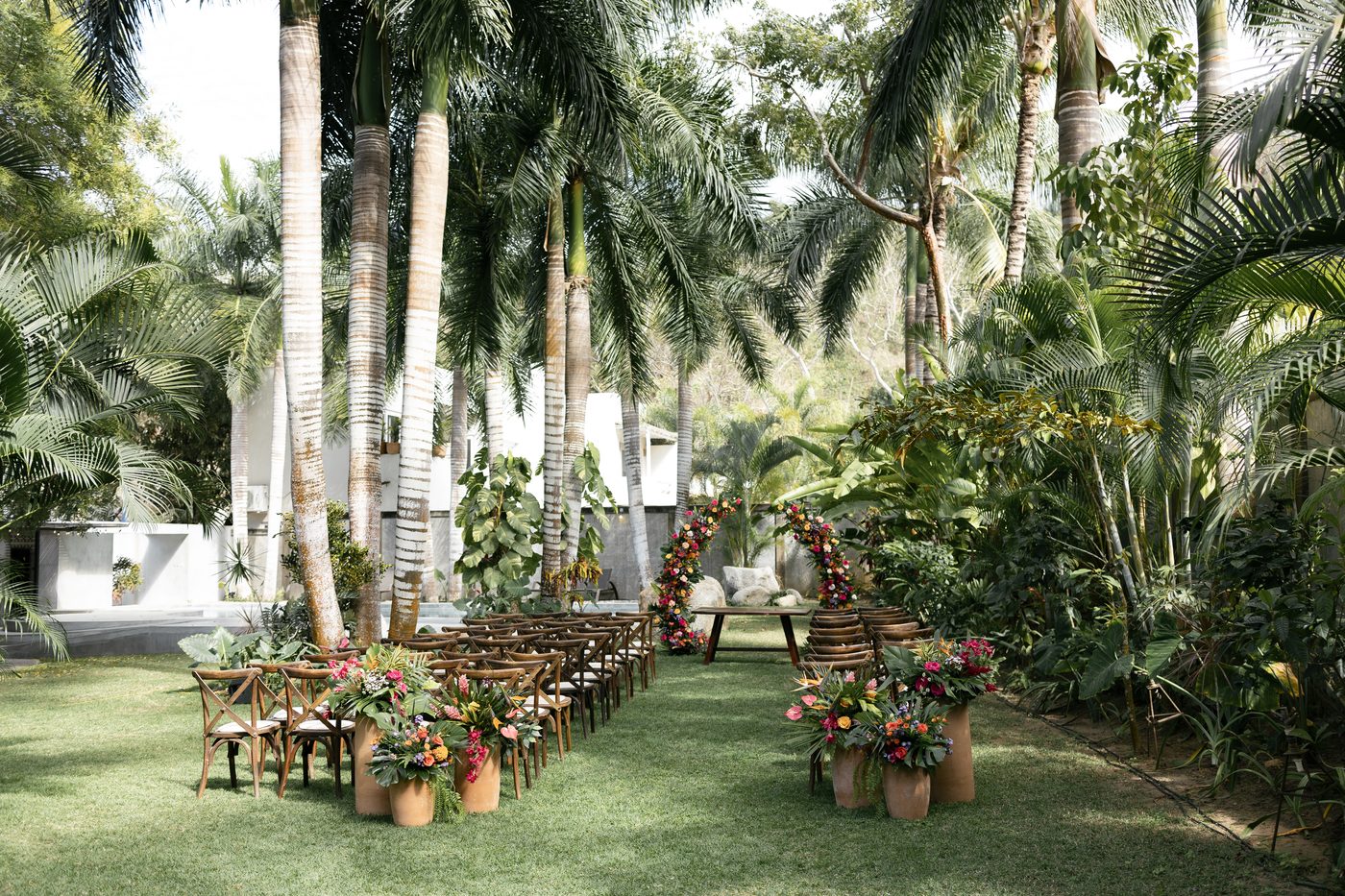
The first hour of a wedding day sets the tone for everything that follows. If your closest people are scattered across separate hotels, waiting on rides, and texting for directions, the celebration starts in fragments. Thoughtful destination wedding logistics bring everyone back into the same rhythm: coffee on the terrace, final vows practiced beneath the palms, a slow walk to hair and makeup, and dinner under the stars without anyone needing to leave the property.
For couples planning a wedding in the Sayulita valley, the goal is not to schedule every minute. It is to create enough structure that the experience feels relaxed, personal, and entirely your own.
Start Destination Wedding Logistics With the Stay
A destination wedding is also a group trip. Before choosing florals or a menu, decide how you want your core guests to live together for several days. This single decision shapes transportation, timelines, welcome events, morning preparations, and the feeling your guests carry home.
A full-estate buyout offers a different kind of ease than a traditional venue paired with off-site lodging. Your wedding party, family, and closest friends wake up within the same private setting rather than commuting between a hotel and an event space. There is room for an unplanned poolside conversation, a yoga class before the ceremony, or a quiet reset after a late dinner.
At Rancho Poco a Poco, three distinct residences - The Hacienda, The Villa, and The Casona - sit across a private one-acre estate. With 10 bedrooms for 25-plus overnight guests and event capacity for more than 250 people, the setting can hold both the intimacy of a shared weekend and the scale of a larger celebration.
The right guest list is not always the biggest one. A 25-person stay with a 100-person wedding can work beautifully when the overnight rooms are reserved for immediate family, the wedding party, and friends who will be part of the full multi-day experience. A more intimate wedding may call for every guest to stay together. Neither approach is better. What matters is being clear about who is invited to the stay, who is invited to the celebration, and what each group needs to know.
Build the wedding around a multi-night rhythm
A three- or four-night stay gives everyone time to arrive as guests and leave as a true gathering. For many couples, the most natural shape is a welcome dinner on the first evening, a full day to explore or rest, the wedding celebration, then a slower final brunch.
This pacing matters especially for guests traveling from different cities. A ceremony on the same day as arrival can feel rushed, even with a carefully written itinerary. Building in a buffer day allows for delayed flights, gradual arrivals, and the emotional exhale that makes destination weddings feel generous rather than over-programmed.
Plan Arrival Around Real Travel Time
For US guests, international travel sounds straightforward until a flight lands late, luggage takes longer than expected, or a group waits for friends on different arrivals. Leave room for it. Ask guests to plan their flights around the first formal gathering rather than assuming everyone will be ready the moment they reach the valley.
Share a concise travel guide well before the wedding. It should include the preferred airport, ground transportation plan, estimated drive times, currency guidance, local weather expectations, and one reliable contact for day-of travel questions. The best guide is calm and specific. Guests should know where to go, whom to text, and whether they need to arrange anything themselves.
Transfers are one of the most overlooked pieces of destination wedding logistics. Private vans can be ideal for small groups arriving close together, while individual transfers may be more comfortable for families with children or guests on irregular flight schedules. The trade-off is cost versus flexibility. A transportation plan does not need to be elaborate, but it should be decided before invitations go out.
For events where alcohol will be served, arrange dedicated transportation for guests staying off-property. This is not the glamorous part of planning, but it is the part that lets everyone fully enjoy a long dinner and a full dance floor without a second thought.
Give Guests One Clear Source of Truth
A beautifully designed wedding website or digital itinerary can make a distant celebration feel immediately approachable. Keep it focused on what guests need, not every detail you are considering behind the scenes.
Include arrival information, the weekend schedule, attire notes, a packing list shaped by the setting, RSVP deadlines, and transportation instructions. If there are optional activities, explain whether guests need to reserve ahead. If you are planning a temazcal ceremony, massage appointments, ice baths, surf time, or a group excursion, clarify who it is for and when it happens.
Avoid overfilling the schedule. Guests have traveled a long way, and they will appreciate time to read by the pool, wander into town, nap, or simply sit with a drink and catch up. One meaningful optional gathering per day is often enough outside the wedding itself.
Make room assignments intentionally
Room assignments can become unexpectedly emotional when friends are traveling with new partners, families need connecting space, or a grandparent needs a quieter room. Begin with practical needs: mobility, young children, privacy, and sleep schedules. Then consider relationships.
Do not wait until the week of the wedding to sort this out. A simple rooming plan lets guests arrive settled, and it prevents you from solving small interpersonal puzzles during your own welcome dinner. If everyone cannot stay on-site, prioritize the people involved in the wedding-day preparation and choose nearby accommodations for the rest of the group with transportation in mind.
Choose Vendors Who Understand the Setting
A private estate wedding gives you freedom, but it also requires a vendor team that respects the property, works well together, and understands the realities of a valley setting. Ask planners and vendors how they handle load-in timing, power needs, rain plans, lighting, parking, sound, and post-event breakdown. The answers reveal far more than a polished portfolio.
For design, let the landscape do some of the work. Candlelight, textured linens, local produce, sculptural florals, and a long table beneath the open sky can feel deeply considered without competing with the surroundings. Luxury is often the space to notice where you are.
Food and beverage deserve the same attention as the ceremony. A welcome dinner, a wedding meal, and a farewell brunch each have a different purpose. The first should feel easy and warm. The wedding dinner should hold the room and keep the evening moving. The final meal is where guests linger, trade stories, and begin the gentle transition home.
Ask your catering team how service will flow for your guest count. A plated dinner, family-style meal, stations, or a late-night offering can all work, but each affects timing, staffing, and the energy of the party. There is no universal best choice. A 40-person dinner has different needs from a 200-person celebration.
Protect the Feeling of the Weekend
The most memorable destination weddings have a little breathing room around their beautiful moments. Build a ceremony timeline that accounts for getting ready, photography, guests arriving, and a private pause for the two of you. Consider whether you want a first look, whether family photos happen before or after the ceremony, and where you can disappear for ten quiet minutes after you say your vows.
Weather planning is part of generosity, not pessimism. Discuss shade, hydration, umbrellas, covered areas, flooring, and a rain contingency early with your venue and planner. Guests should never be left wondering what happens if conditions shift. When the plan is clear, everyone can stay present.
It also helps to name a decision-maker who is not one of you. A planner, trusted family member, or designated point person can answer vendor questions and handle small changes. Your job is to be in the moment, not approve an extra set of chairs while you are getting ready.
A destination wedding asks people to travel farther, take more time away, and enter a place that matters to you. Honor that gift with a gathering that feels held from the first airport pickup to the final coffee together. When logistics are quietly cared for, what remains is the reason everyone came: a few extraordinary days, shared closely, in a sanctuary that feels entirely yours.