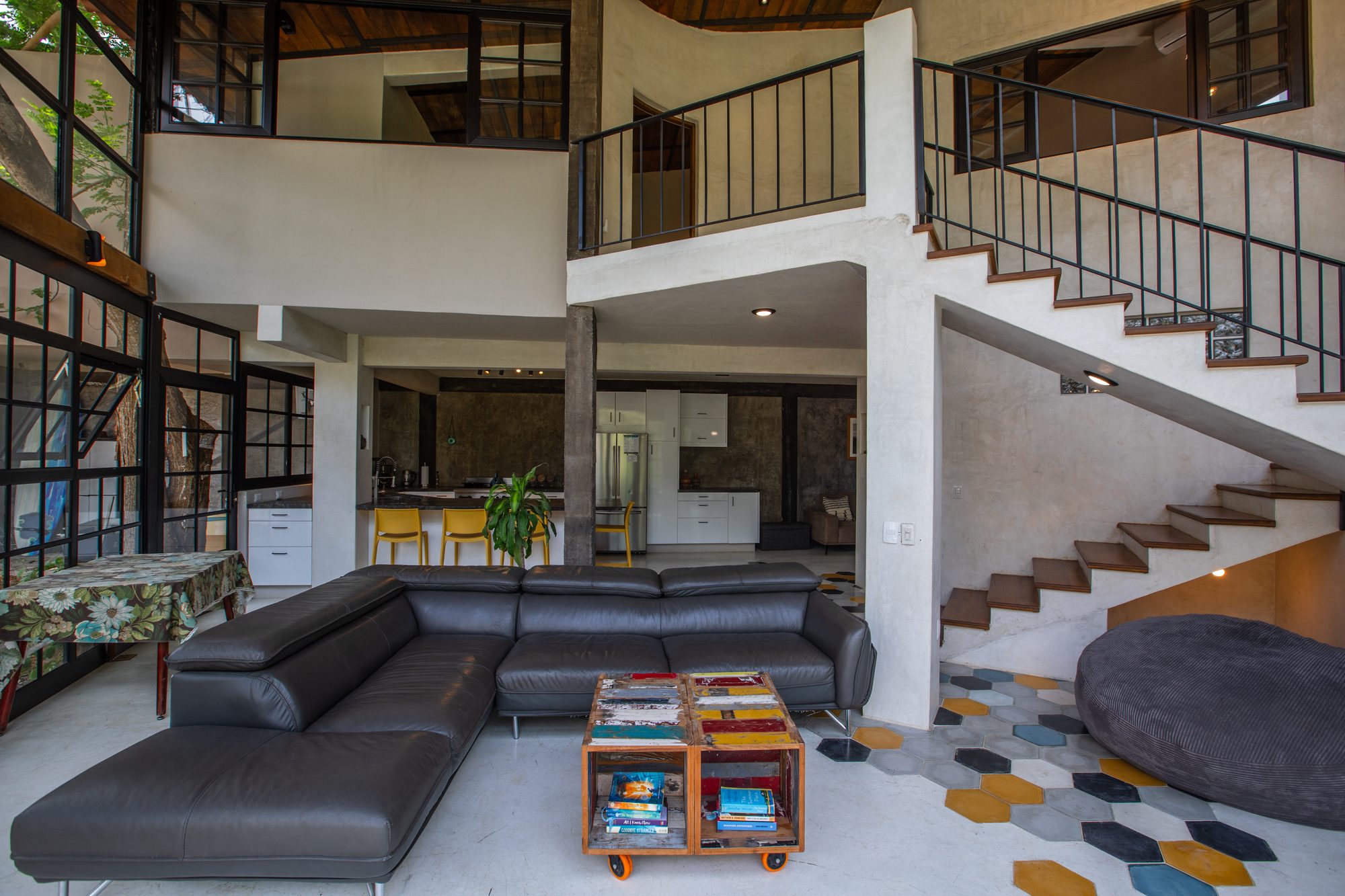
The villa versus hotel groups question is rarely about whether everyone has a beautiful room. It is about what happens in the hours between the planned moments: the unhurried coffee after a late dinner, the children moving freely between generations, the bride taking a quiet breath before the ceremony, or the retreat group lingering after morning practice. For a gathering meant to feel personal, where your group stays can shape the entire experience.
Hotels offer familiarity, room inventory, and the ease of established service. A private estate offers something less standardized and often more meaningful: one shared home base, held entirely for your people. The right choice depends on the kind of time you hope to create.
Villa Versus Hotel Groups: The Real Difference Is Access
At a hotel, a group may reserve a block of rooms, yet the property remains a shared environment. Other guests are in the pool, at breakfast, in the corridors, and often within view of your celebration. Your itinerary must fit around public spaces, restaurant hours, venue availability, and the natural rhythm of a business serving many parties at once.
A full-estate villa changes that arrangement. The grounds, gathering spaces, and amenities belong to one group for the duration of the stay. There is no negotiating for pool loungers, no wondering who will overhear a rehearsal dinner toast, and no need to scatter everyone after an event because guestrooms sit in separate buildings.
That privacy is not simply a luxury detail. It creates ease. Guests settle in sooner when they know the only people around them are the people they came to be with. A wedding weekend feels less like a series of reservations and more like a house party with exceptional standards.
When a Hotel Is the Better Choice
A hotel can be the practical answer for very large conventions, corporate meetings with hundreds of individual travelers, or groups whose guests need the freedom to arrive and depart on entirely different schedules. It may also suit travelers who prefer a broad menu of restaurants, a formal lobby, and the option to remain anonymous within a larger property.
Hotels can be especially useful when overnight guests far exceed the size of the event itself. If 180 people need beds, a room block may be more straightforward than coordinating several homes. For a one-night gathering with little interest in shared downtime, the built-in structure of a hotel can also be enough.
But a hotel is not automatically simpler. Room assignments, resort fees, transportation between accommodations and event venues, restaurant reservations, and separate contracts can quickly create a fragmented weekend. The apparent convenience of booking rooms may come with more moving parts once the group begins to gather.
A Villa Brings the Group Back Together
The strongest case for a villa is not its architecture, although beautiful rooms and thoughtful design matter. It is the way the space keeps people connected without forcing them to be together every minute.
One guest can read in a shaded corner while another takes a dip in the pool. A few friends can gather for a massage while grandparents watch the afternoon unfold from the terrace. The group can come back together for dinner under the stars without arranging a meeting point or waiting for a shuttle. There is room to retreat, and room to return.
For multigenerational families, this shared rhythm is often the real gift. Grandparents do not need to navigate a sprawling property to find everyone. Parents are not constantly coordinating elevators, wristbands, or restaurant seating. Younger guests can move through the day with more freedom, while the group still feels held in one place.
For friends celebrating a milestone, the villa becomes part of the memory. The kitchen conversations, slow breakfasts, impromptu swims, and final-night dinner often matter as much as the designated celebration. Those moments are difficult to manufacture when everyone disappears to separate floors at the end of the evening.
Weddings Need More Than a Ceremony Site
A destination wedding asks a great deal of its setting. It must be beautiful, certainly, but it also needs to support the emotional arc of several days. Couples need a place to welcome loved ones, gather their wedding party, share meals, prepare without rushing, and let the celebration soften into something intimate after the formalities end.
A hotel wedding can offer polished ballrooms and experienced banquet teams. Yet the couple may still be one event among several. Another wedding may be taking place nearby. Guests can encounter strangers around every turn. Even the most elegant property may not provide the feeling that the weekend belongs only to you.
At a private estate, the ceremony, dinner, and overnight stay can exist within the same story. At Rancho Poco a Poco, a one-acre estate in the Sayulita valley brings together three distinct residences - The Hacienda, The Villa, and The Casona - with 10 bedrooms for 25-plus overnight guests. The property can welcome celebrations of more than 250 people while keeping the wedding party and closest family in one private setting.
That combination matters. Your core group wakes up together, moves through the day together, and has somewhere to land after the music quiets. Vows beneath the palms are not a brief stop between hotel rooms and a separate venue. They are part of a weekend with a natural center.
Retreat Leaders Need Privacy and Flow
For wellness retreats, the villa versus hotel groups decision often comes down to attention. A retreat is built on intention, whether the focus is yoga, movement, leadership, rest, or renewal. It is difficult to protect that atmosphere when participants are sharing spaces with vacationers on a different wavelength.
A dedicated estate allows facilitators to shape the days more thoughtfully. Morning practice can begin in an open-air yoga studio. A temazcal ceremony can become an intentional evening ritual. Guests can move between ice baths, massage therapy, quiet conversation, and nourishing meals without re-entering a public resort environment each time.
The setting should support the work without becoming a distraction. In the lush Sayulita valley, an estate stay can offer immersion in nature while remaining close enough to local dining, markets, and adventures for the moments when the group wants to venture out. Returning to a private property afterward restores the sense of containment that makes a retreat feel cohesive.
There is a practical consideration here, too. Retreat leaders should choose a property that can comfortably host programming as well as sleep their guests. An XPT saltwater training pool, movement space, wellness amenities, and areas for shared meals can reduce the need for off-site rentals and daily transport. Fewer transitions mean more time for the actual purpose of the retreat.
Consider the Pace, Not Just the Price
Comparing a villa and a hotel by nightly rate alone can be misleading. Hotels typically price by room, then add taxes, service charges, dining, transportation, event rentals, and venue fees. A villa buyout may appear higher at first glance, but it includes something hotels cannot sell room by room: control of the environment.
For a group willing to commit to a three- or four-night stay, that control can be especially valuable. Instead of compressing every meaningful interaction into one evening, you have time. Time for a welcome dinner, time for a wellness morning, time for a rehearsal that does not feel rushed, and time for the unplanned conversations that become the heart of a trip.
The trade-off is real. A private estate asks the group to embrace a shared destination and a common rhythm. It is not ideal for guests who want unlimited anonymous dining options or the ability to operate as though they are traveling alone. But for people gathering around a relationship, a family, a milestone, or a shared practice, that is often precisely the point.
Choose the Setting That Protects the Reason You Gathered
Ask one question before comparing amenities: Do you want your guests to attend the occasion, or do you want them to inhabit it? A hotel can host a group well. A private villa can make the group itself the center of the experience.
If what you envision is a few days of real closeness - long-table dinners, open-air mornings, laughter carrying across the grounds, and space to reset your rhythm - choose a place where your people do not have to compete for the feeling of being together.