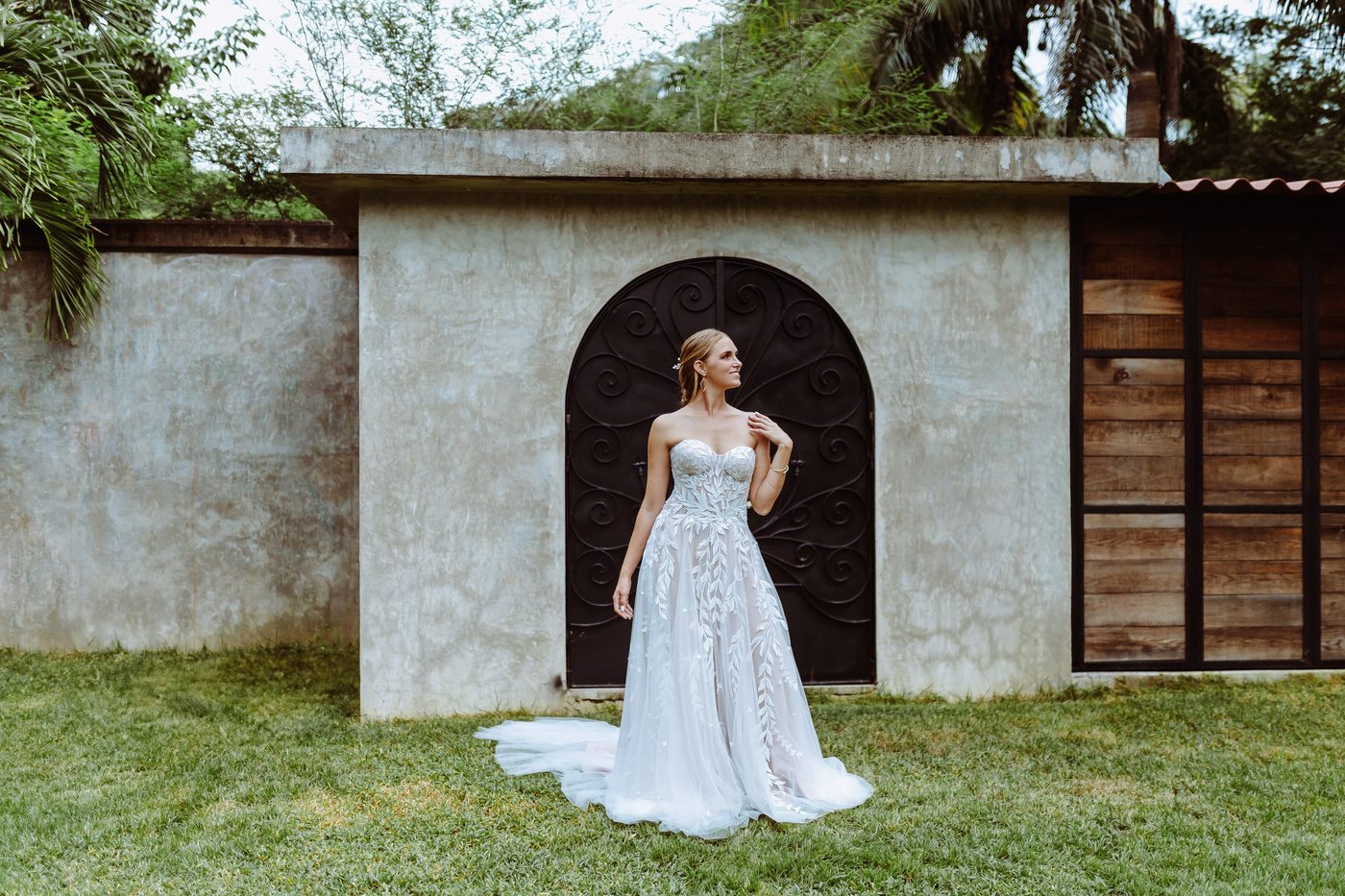
A wedding venue capacity comparison can look deceptively simple: one venue says 120 guests, another says 250. Yet those numbers rarely describe the same experience. One may mean 120 people seated for dinner indoors; another may mean 250 people gathered across open-air grounds for a celebration beneath the palms. For a destination wedding, capacity is not just a headcount. It shapes where your people sleep, how the day flows, and whether the setting feels personal once everyone arrives.
For couples bringing loved ones to Mexico, the right venue is not necessarily the one with the largest maximum. It is the one that gives your guest list room to breathe while protecting the intimacy that made a private celebration appealing in the first place.
Wedding Venue Capacity Comparison: Know What Is Being Counted
Before comparing venues, ask what each capacity figure actually includes. Event capacity, overnight capacity, seated dinner capacity, and cocktail-style capacity are different measurements. A property that can host a 200-person reception may only sleep 30 guests. A hotel may accommodate every attendee overnight, but your wedding events may take place among other travelers and unrelated groups.
A useful comparison begins with three numbers: how many guests will attend, how many you want nearby for the full stay, and how many people need to be seated at the reception. These numbers may overlap, but they do not have to be identical. Many destination weddings have an intimate core group staying together for several nights, with additional guests arriving for the ceremony and celebration.
The question is not simply, “Can this venue fit everyone?” Ask, “Can it hold every moment we want to create?”
The Four Capacities That Matter Most
Overnight capacity
Overnight capacity determines who shares the slow, meaningful hours around the wedding itself: morning coffee, welcome dinners, poolside afternoons, late-night conversations, and the unhurried exhale after the celebration. For couples planning a multi-day gathering, this number deserves as much attention as the reception maximum.
Hotels offer room volume, which can be practical for very large guest lists. The trade-off is dispersal. Your group may be spread across floors, buildings, or even separate properties, and shared spaces remain public. A private estate offers a different kind of value: fewer rooms, but a single home base that belongs only to your group.
At Rancho Poco a Poco, three distinct residences across a one-acre estate sleep 25+ overnight guests in 10 bedrooms. That arrangement works especially well for immediate family, a wedding party, or the friends who will turn a single wedding day into a full shared experience.
Ceremony capacity
Ceremony capacity is often the most forgiving number, especially in open-air settings. Guests can stand, sit in a looser arrangement, or gather across a lawn or terrace. Still, do not assume an expansive view means unrestricted space. Consider the aisle, chair placement, shade, sound, accessibility, and the distance between guests and the vows.
An intimate ceremony of 40 has different needs than a ceremony for 180. The smaller group may feel best in a tucked-away garden setting where every face is visible. A larger group needs clear sightlines, thoughtful amplification, and enough circulation room for guests, musicians, photographers, and a processional that does not feel cramped.
Seated dinner capacity
A seated dinner is where capacity gets real. Tables require more room than couples expect, particularly when you account for service lanes, bars, a dance floor, floral installations, and the simple ability for a guest to leave their chair without causing a chain reaction around the table.
Ask each venue for its seated dinner capacity with your preferred table shape and layout. Long communal tables create a beautiful, generous atmosphere but can use space differently than rounds. A 150-person dinner with a dance floor may require significantly more usable area than a 150-person cocktail reception.
The most memorable dinners feel abundant, not compressed. There should be room for candlelight, conversation, service, and the small pauses that make dinner under the stars feel effortless.
Reception capacity
Reception capacity usually reflects the venue at its most flexible. It may include guests circulating between a bar, dance floor, lounge seating, and food stations. This is often the highest number listed on a venue brochure, but it is not automatically the right number for your event.
If dancing is central to your celebration, reserve more space for it. If your vision is a dinner-led evening with a live acoustic set and long conversations, the layout can be more intimate. Consider the rhythm of the night, not only the total attendance. A capacity of 250+ can support a generous gathering, but the design should still make 80 guests feel held rather than lost.
Comparing Hotels, Resorts, and Private Estates
Hotels and resorts are built for scale. They can provide a broad range of rooms, centralized logistics, and established event teams. For a wedding with 200 guests all needing individual accommodations, that structure may be the clearest fit. The compromise is that your wedding exists within a larger operation. Elevators, pools, restaurants, and neighboring events may all be shared.
A conventional event venue can offer a polished setting for one evening, particularly for local celebrations. But it may require separate transportation, lodging, rehearsal dinner spaces, and daytime activities. Each transition adds another schedule, another vendor handoff, and another opportunity for the group to scatter.
A private estate is designed around a different priority: continuity. Your nearest people sleep on-site, meals unfold in the same setting as the ceremony, and the grounds become yours for the duration of the stay. It is not a resort, not a hotel, but a sanctuary entirely yours. For destination couples, that privacy can matter more than access to an unlimited number of rooms.
This model is especially compelling when the event guest count is larger than the overnight group. Your inner circle can stay together while additional guests join for the wedding celebration. The estate becomes the heart of the weekend rather than merely the place where the ceremony happens.
Capacity Is Also About Flow
A venue can technically hold your guest count and still feel wrong. The difference is flow. Think about what happens before the ceremony, during cocktail hour, between dinner and dancing, and after the music winds down. Where do people gather? Where do older relatives rest? Can your guests move without crossing through the catering setup or interrupting a private moment?
For a multi-day wedding, flow extends beyond the reception. A yoga studio may become a quiet morning reset for the wedding party. A saltwater pool creates a natural place for guests to reconnect before the welcome dinner. A temazcal ceremony, massage, or ice bath can turn a destination gathering into something more restorative and personal.
These amenities do not increase a venue’s official event capacity. They do increase its ability to host people well. That distinction matters when choosing a place for several days rather than several hours.
Questions to Ask Before You Sign
Capacity claims become useful when they are paired with a clear site plan and honest operational details. Before committing, ask the venue to walk you through the event with your actual guest count, not just its published maximum. Four questions reveal a great deal:
- How many guests can be seated for dinner with a dance floor, bar, band or DJ, and service access?
- How many people can stay on-site, and how are bedrooms distributed across the property?
- What spaces are available if weather changes the plan or guests need shade and a quieter place to gather?
- Is the property exclusively yours for the duration of the wedding stay, including shared amenities and event areas?
Also ask about the minimum stay. A three- or four-night estate buyout may seem different from a one-night venue rental, but it can replace a patchwork of separate bookings. When lodging, welcome gatherings, recovery time, and wedding-day spaces live within one private property, the value is measured in more than line items.
Choose the Capacity That Feels Like You
A 30-person wedding does not need a small venue to feel intimate, and a 200-person wedding does not need to feel impersonal. The best setting creates proportion: enough space for ease, enough structure for celebration, and enough privacy for the people you chose to be there.
When you compare capacities, picture the people rather than the number. Picture your parents settling in for dinner, friends finding each other by the pool, children with room to move, and a full dance floor beneath the night sky. The right venue makes those moments feel natural, then gives them room to stay with you.